
How AI Search Engines and ChatGPT Crawl Your Post
If you ask ChatGPT, Claude, or Google’s SGE (Search Generative Experience) what your brand does, will it give a correct answer? Will it cite you? Or will it ignore you entirely?
Most brands have optimized for traditional search engines: keywords, backlinks, and domain authority. But AI search and assistants don’t read the web the way Google does. They read entities, relationships, and trust signals.
At TBDA – The Bees Digital Agency, we’ve been studying how large language models (LLMs) decide which brands to surface. The conclusion is clear: you need a digital footprint built for AI, not just for SEO.
1. Entity Consistency (Your Brand’s Identity)
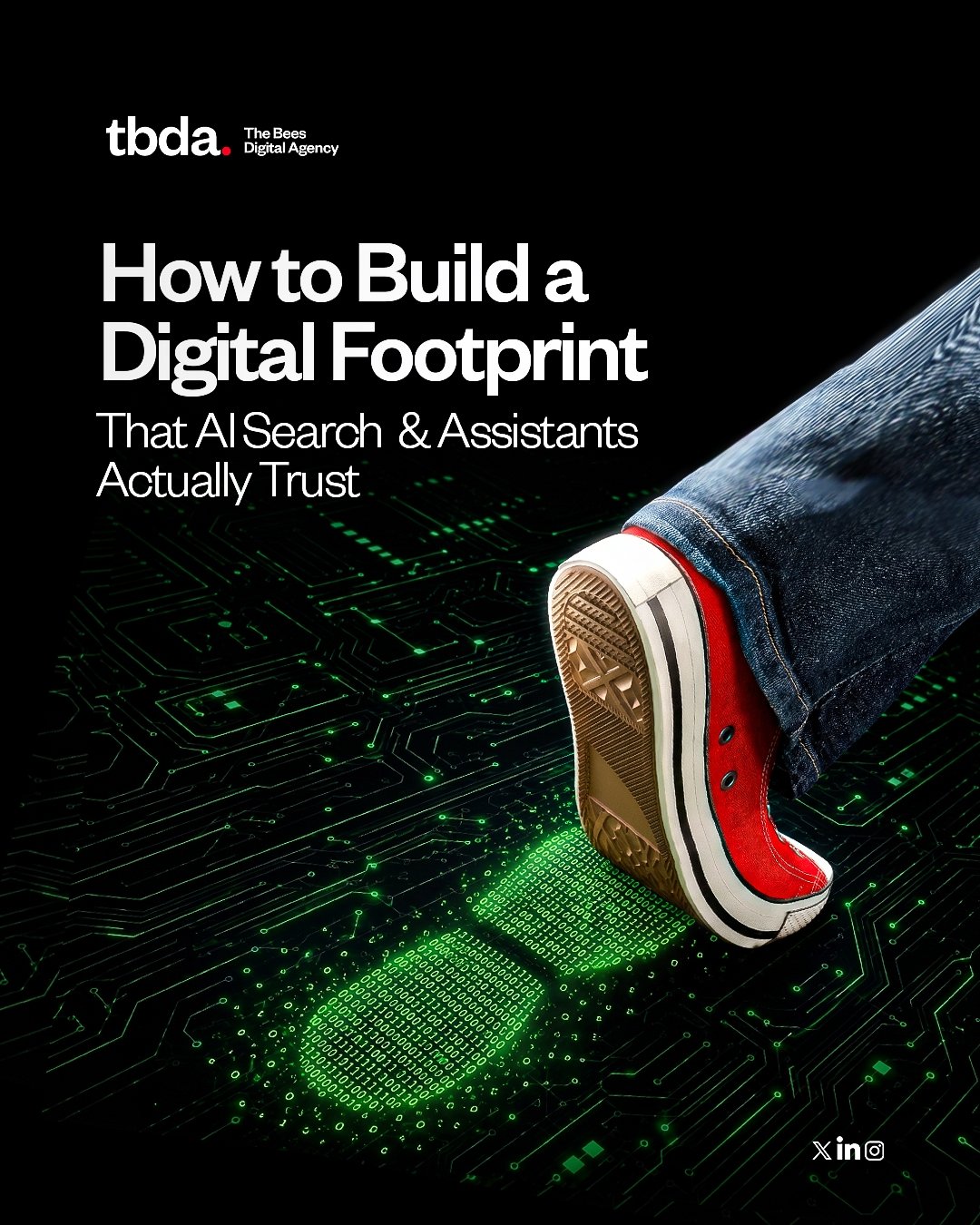
AI models like GPT-4 and Gemini pull from knowledge graphs (Wikidata, Wikipedia, Crunchbase, social profiles). If your brand name, address, phone number, logo, and description vary across the web, the AI sees multiple “entities”, or worse, none at all.
2. Structured Data (Schema Markup)
AI assistants don’t “see” your website the way a human does. They read code. Schema markup (Organization, Local Business, FAQ, How To, Article/Blogs) tells AI exactly what you are, who owns you, and what you offer.
3. Third-party Trust Signals
AI models favor brands that appear on trusted external platforms: LinkedIn, Reddit, G2, Trustpilot, industry forums, and news sites. Why? Because LLMs are trained to value corroboration.
4. A “Sourceable” Knowledge Base
AI assistants love citing original data, unique definitions, and clear FAQs. If your website has vague marketing fluff, LLMs will ignore it. If you publish definitive, factual content (glossaries, original research, step-by-step guides), you become citable.
5. Positive Sentiment and Recency
AI models factor in recent mentions and sentiment. A brand that appears only in old, negative, or low-engagement contexts will be deprioritized.
Action: Monitor brand sentiment across social and review platforms. Push fresh, positive content weekly.
Why Most Brands Fail Here
They treat AI search like Google SEO. That’s a mistake. Google ranks pages. AI assistants rank entities. A page can rank #1 on Google and still be invisible to ChatGPT if your entity footprint is weak.
At TBDA, we’ve run side-by-side tests: brands with strong entity consistency appear in AI answers 4x more often than those with high domain authority alone.
In Article 2 of this series: You have the footprint, now you need content AI wants to cite. We call it Citation Bait. In the next article, we will show you exactly how to write it.